How the Kavach System Prevents Train Accidents
A simple explanation of India’s indigenous train protection technology
Railway networks are among the most complex transport systems in the world. Thousands of trains move across the same tracks every day, often at high speeds. Managing this safely requires not only skilled railway staff but also advanced technology.
India has introduced a modern safety system called Kavach to prevent train accidents, especially collisions caused by human error. Kavach is an Automatic Train Protection (ATP) system developed by Indian Railways with support from the Research Designs and Standards Organisation (RDSO). The system acts like an intelligent safety layer that constantly monitors train movement and automatically intervenes when necessary.
What Is the Kavach System?
Kavach, which means armour, is a technology designed to prevent train collisions and overspeeding. It connects trains, signals, and railway control systems through radio communication and onboard electronics.
The system constantly calculates the position and speed of trains. If a train driver fails to follow a signal or attempts to move too fast, Kavach automatically slows down or stops the train.
This safety layer significantly reduces the risk of accidents caused by human mistakes, signal misinterpretation, or communication failures.
Why Train Accidents Happen
Most train accidents are not caused by track failure or equipment breakdown alone. In many cases, they happen because of operational mistakes, communication gaps, or failure to follow signalling rules.
- Signal Passed at Danger (SPAD) – when a train crosses a red signal
- Human error in controlling speed
- Miscommunication between train drivers and controllers
- Failure to maintain a safe distance between trains
Even experienced drivers can make mistakes during long shifts or under difficult operating conditions. Kavach works as a backup safety layer that does not get tired or distracted.
How Kavach Prevents Train Collisions
The Kavach system works through coordination between several components installed across the railway network.
1. Continuous Train Monitoring
Every train fitted with Kavach carries onboard equipment that tracks its location, direction, and speed. This information is continuously shared with the railway network through radio communication.
2. Communication Between Trains
Kavach allows trains on the same track to communicate with each other. If two trains approach each other on the same line, the system automatically detects the danger.
When a collision risk is identified, both trains can be slowed down or stopped automatically.
3. Automatic Braking
If a train driver fails to stop at a red signal, Kavach automatically activates the braking system.
This helps prevent SPAD-related accidents, which are one of the major causes of railway collisions.
4. Speed Control
The system also enforces speed restrictions. If a train goes beyond the permitted speed for a section, Kavach intervenes and brings the speed down automatically.
5. Safe Distance Between Trains
Kavach helps maintain safe separation between trains. Even when visibility is poor or a signal is missed, the system prevents two trains from entering the same dangerous zone.
Key Components of the Kavach System
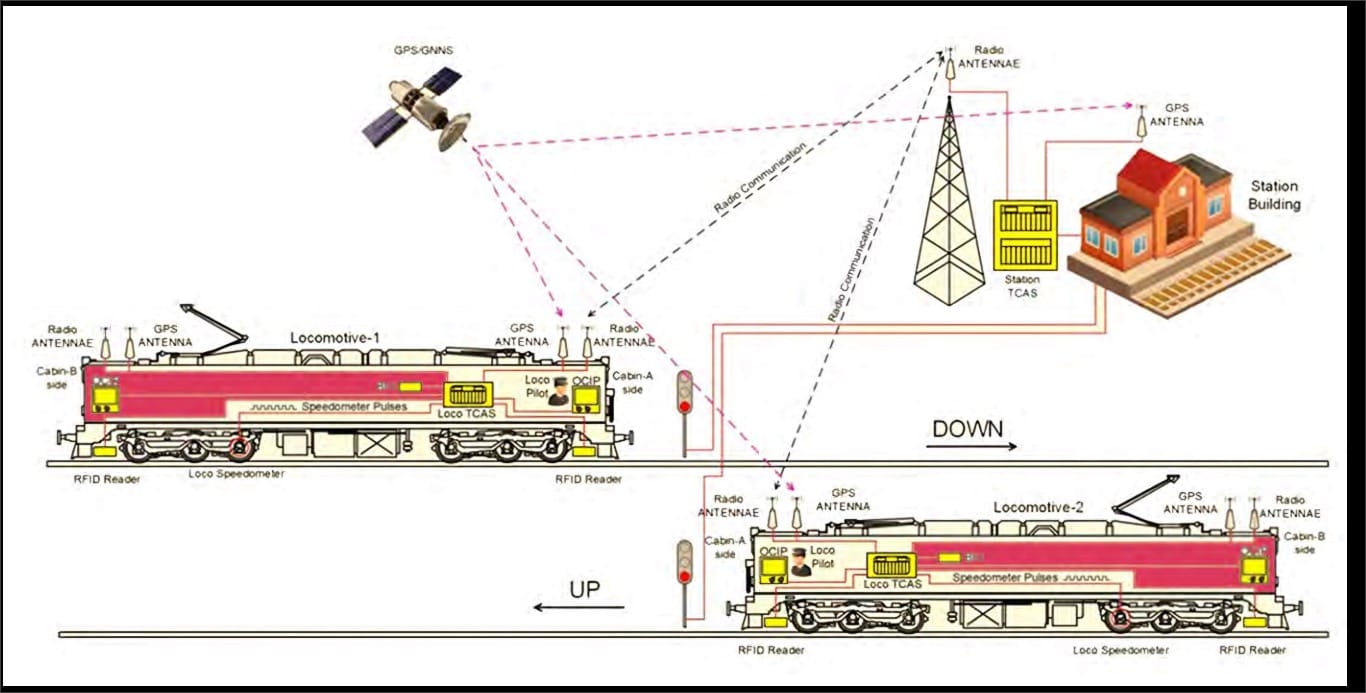
The system works through multiple integrated technologies installed both on trains and along the tracks.
Onboard Equipment in Locomotives
- Speed sensors
- GPS modules
- Radio communication devices
- Automatic braking interface
Trackside Equipment
- Signal interface units
- Radio towers
- RFID tags placed along railway tracks
Control Centre Integration
- Centralised monitoring systems
- Data communication with railway operations
Together, these parts create a real-time safety network across railway routes.
Advantages of Kavach for Railway Safety
Prevents Head-On Collisions
The system can detect trains approaching on the same track and apply brakes before impact.
Reduces Human Error
Even if the driver misses a signal or misjudges speed, Kavach can intervene automatically.
Improves Operational Safety
Continuous monitoring allows trains to run more safely, especially on busy corridors with heavy traffic.
Indigenous and Cost-Effective
Kavach was developed in India, making it more affordable to implement compared to many imported train protection systems.
Kavach Deployment in India
Indian Railways has started installing Kavach across major rail corridors, especially on high-density routes where traffic is heavy and safety requirements are more critical.
Initial deployment began on sections of South Central Railway, including routes in Telangana and Maharashtra. The long-term goal is to expand the system across thousands of kilometres of the Indian railway network.
The idea is to make Kavach a standard safety layer across Indian Railways, improving passenger safety and reducing the chances of avoidable accidents.
The Future of Railway Safety in India
Railway safety technology is evolving fast. Systems like Kavach mark an important step towards smarter and safer rail transport in India.
In the future, integration with advanced signalling, satellite-based tracking, and automated traffic management could make train operations even safer and more efficient.
For a country with one of the world’s largest railway networks, technologies like Kavach will play a major role in ensuring that trains run not only faster, but much more safely for millions of passengers every day.
Related posts:
 Demystifying the Working of Railway Signaling Systems: A Comprehensive Overview
 Ensuring Safe Railway Travel: A Comprehensive Overview of the Railways and Transport Safety Act 2003 in United Kingdom (UK)
 “High-speed” on Paper: The Reality of the Bengaluru–Ernakulam Vande Bharat Express
 Top Train Videos: Explore the Best Clips for Enthusiasts