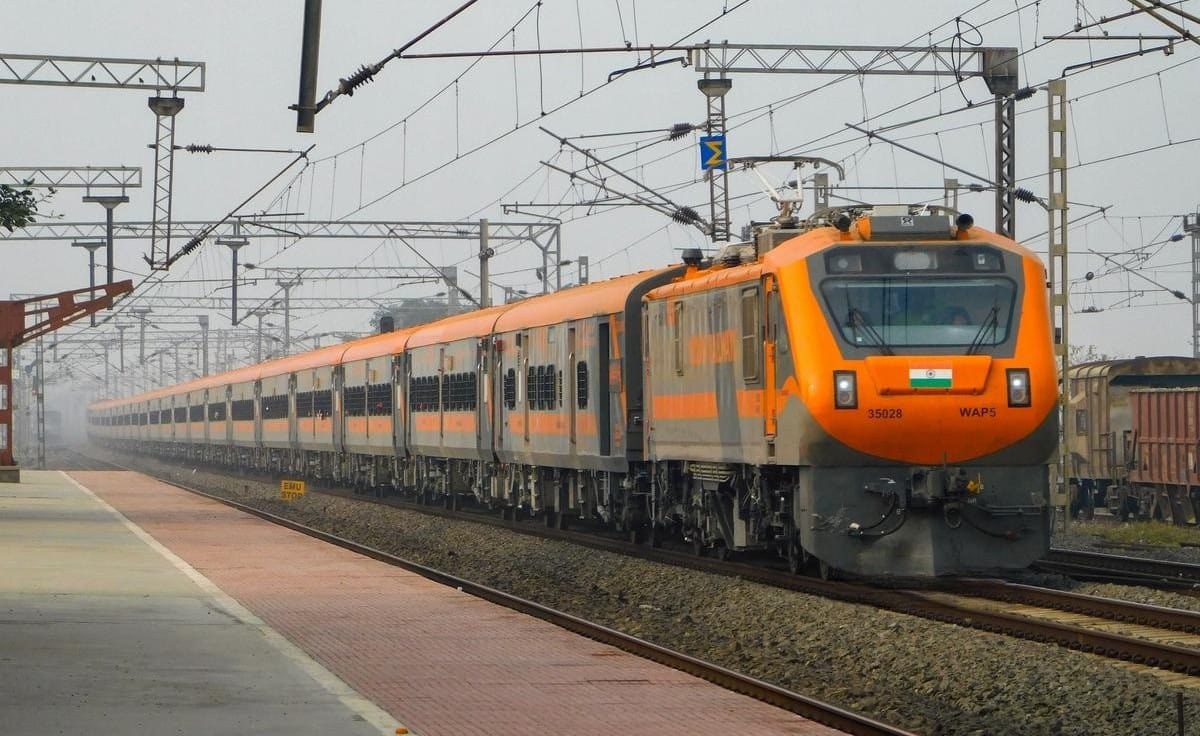

If you’ve recently taken a journey in an LHB 3AC coach and felt repeated jerks throughout the ride, you’re not alone. Many passengers have started to notice that Indian Railways’ modern LHB coaches—despite being hailed for better safety and speed—sometimes offer a less comfortable ride compared to older ICF coaches. But why is this happening?
Let’s explore the reasons behind these sudden jerks in LHB coaches and how Indian Railways can work toward a smoother, more enjoyable passenger experience.
What Are LHB Coaches?
LHB (Linke Hofmann Busch) coaches are modern train coaches introduced by Indian Railways to replace the older ICF (Integral Coach Factory) coaches. Designed in Germany, these coaches offer:
Higher speed potential (up to 160 km/h)
Improved safety features
Better ride quality on paper
Reduced chances of derailment due to anti-telescopic design
Yet, many passengers report that LHB coaches tend to feel jerkier, especially during braking or while passing through poorly maintained tracks.
Why Do LHB Coaches Feel Jerkier Than ICF?
Despite the advanced engineering, LHB coaches tend to reveal track imperfections and operational inefficiencies more than ICF coaches. Here’s why:
1. CBC Couplers vs Screw Couplers
LHB coaches use Centre Buffer Couplers (CBC) instead of the screw-type couplers found in ICF coaches. CBCs are rigid and tight, minimizing slack and enhancing safety. However, they also transfer forces more directly—which means any sudden braking or acceleration results in noticeable jerks.
2. High-Speed Suspension System
LHB coaches are equipped with FIAT bogies and air suspension for better high-speed performance. These systems are more sensitive to poor track conditions, unlike the more forgiving coil-spring suspension in ICF coaches.
3. Modern Braking Systems
LHB coaches use pneumatic disc brakes, which are highly effective but also more abrupt than the brake blocks in ICF coaches. Sudden braking can result in uncomfortable jerks, especially if the train decelerates rapidly or if the brake system isn’t calibrated perfectly.
4. Track Quality Matters More
LHB coaches are designed for smoother tracks, so any misalignment, dips, or gradients on Indian tracks are felt more prominently. ICF coaches, though outdated, were better at masking these imperfections due to their less rigid systems.
5. Rake Handling & Weight Balance
Jerks can also occur due to poor rake marshalling, where uneven weight distribution between coaches affects balance. Improper attachment or detachment during shunting may also lead to harsh jolts.
LHB vs ICF: A Comparison
| Feature | LHB Coach | ICF Coach |
|---|---|---|
| Max Speed | 160 km/h | 110 km/h |
| Suspension | FIAT Bogies + Air Suspension | Coil Spring Suspension |
| Coupling | CBC (Centre Buffer) | Screw Coupler |
| Safety | Anti-telescopic, crashworthy | Prone to telescoping |
| Ride Comfort | Smoother on good tracks, jerky on bad ones | Less sensitive to track quality |
What Indian Railways Can Do to Fix This
To improve the passenger experience in LHB coaches, Indian Railways needs to focus on:
✅ Track Upgradation: Modernize tracks to LHB standards to reduce vibration and jolts.
✅ Brake Calibration: Fine-tune the pneumatic brake system for gradual deceleration.
✅ Suspension Maintenance: Regular checks on air suspension and FIAT bogies.
✅ Rake Management: Ensure proper balancing and smooth coupling of coaches.
✅ Staff Training: Train loco pilots and station staff on handling LHB-specific dynamics.
Final Thoughts
The jerks experienced in LHB coaches are not a design flaw—but a symptom of modern coaches running on outdated infrastructure. As Indian Railways continues to upgrade its rolling stock, it must also match that progress with track modernization and operational refinement.
Passengers deserve not only safety but also comfort. With proper planning and upgrades, LHB coaches can offer the best of both worlds.
Related posts:
 Indian Railways High Speed Trains InterCity Express Debuts New LHB Coaches 12678 Ernakulam Bengaluru
 Indian Railways Coach positions announcement at Palakkad Junction Railway station
 The Challenges of Indian Railways Online Booking: A Closer Look
Evening Railfanning at Mankurussi | Passenger & Express Trains Under Cloudy Skies | Palakkad, Kerala
The Challenges of Indian Railways Online Booking: A Closer Look
Evening Railfanning at Mankurussi | Passenger & Express Trains Under Cloudy Skies | Palakkad, Kerala