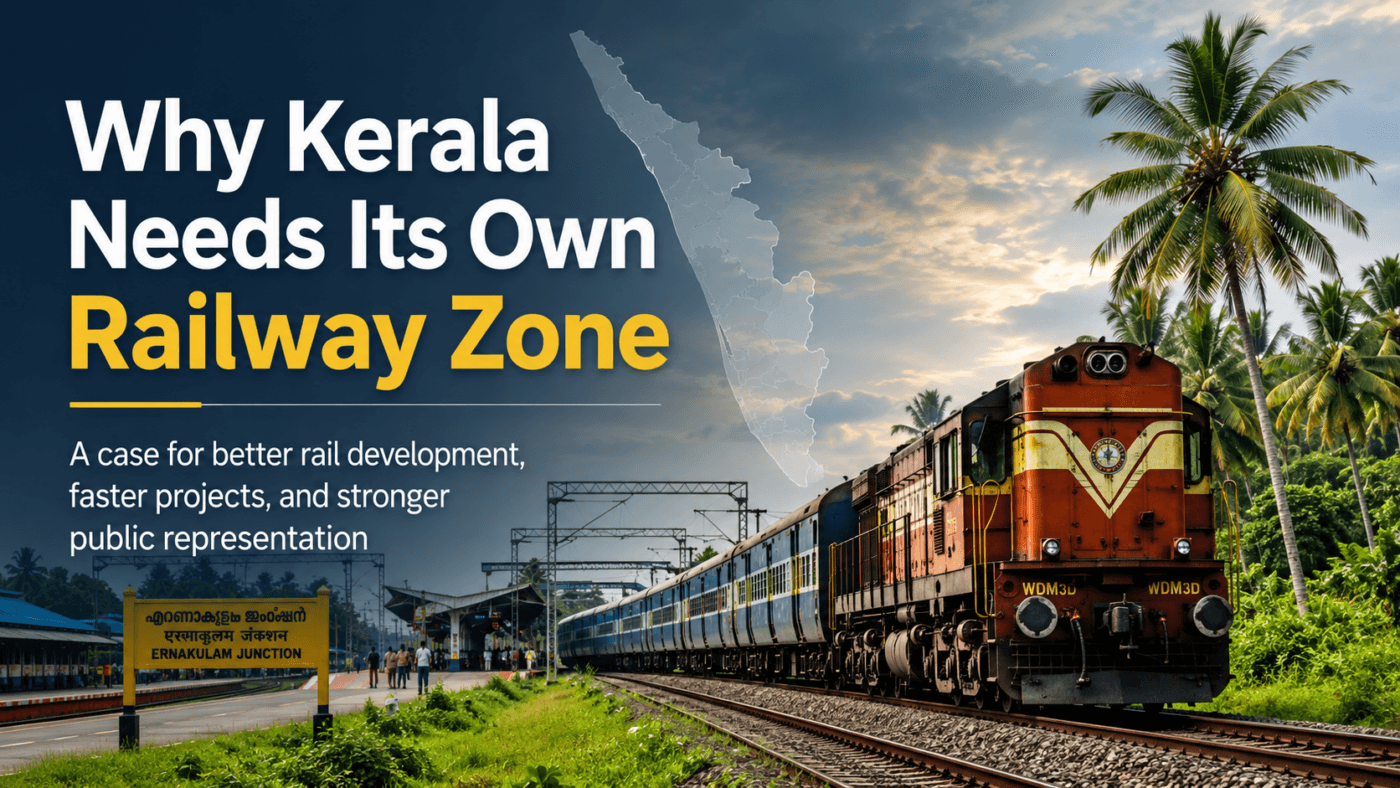
Indian Railways is one of the largest railway networks in the world. For smooth administration, it is divided into zones and divisions. These zones decide, plan, manage and prioritise railway operations, passenger services, infrastructure development, station upgrades, freight movement and new projects.
At present, Keralam does not have a separate railway zone.
The railway network in Keralam is part of Southern Railway, headquartered in Chennai. Kerala mainly comes under the Palakkad and Thiruvananthapuram railway divisions. While this arrangement has existed for decades, the real question is simple: is Keralam getting the railway attention it deserves?
The honest answer is no.
What Is an Indian Railway Zone?
An Indian Railway zone is an administrative unit of Indian Railways. Each zone controls multiple divisions. These divisions manage stations, tracks, train operations, passenger amenities, safety works, maintenance, revenue and local project execution.
In simple words, a zone is not just a name board. It is a power centre.
The location of zonal headquarters matters because it influences planning, administrative focus, political pressure, project monitoring and public accountability. When a state has a strong railway administrative presence, its projects are more visible, more regularly reviewed and harder to ignore.
Current Situation of Keralam
Keralam is now under Southern Railway. Southern Railway covers a large region, including Tamil Nadu, Kerala, Puducherry and parts of neighbouring areas.
This means Kerala’s railway issues compete with the requirements of bigger railway markets and larger administrative priorities. Naturally, the headquarters gives more attention to corridors that bring more operational pressure, more political weight and more institutional visibility.
This is not about blaming Tamil Nadu or Southern Railway staff. That would be lazy thinking. The issue is structural.
Kerala has a unique rail geography and a unique passenger profile. It is a long, narrow state with very high passenger dependence on trains, heavy inter-city movement, large migrant worker travel, tourism traffic, Sabarimala pilgrim movement, NRI-linked travel, and intense pressure on limited railway corridors.
Still, Kerala is forced to function as a side chapter in a larger zonal book.
Why Keralam Needs a Separate Railway Zone
1. Kerala’s railway needs are different
Kerala is not a large landmass with multiple wide railway corridors. The state has a narrow railway spine running through densely populated towns and cities. Many sections are saturated. Delays happen not because people love delay as a lifestyle, but because the system is stretched.
The state needs focused planning for doubling, tripling, automatic signalling, station capacity, MEMU expansion and better terminal facilities. A separate Keralam Railway Zone can bring sharper focus to these specific needs.
2. Passenger demand is very high
Kerala has one of the most travel-intensive populations in India. Daily commuters, students, office workers, migrant labourers, pilgrims, tourists and long-distance passengers depend heavily on trains.
The demand for more MEMU services, more unreserved coaches, better intercity trains and better night travel options is real. But public demand often gets buried inside larger zonal priorities.
A railway zone based in Keralam can hear these issues faster and respond with better accountability.
3. People’s voice is not being heard properly
Railway users in Kerala regularly raise issues about late trains, overcrowding, poor last-mile planning, shortage of regular trains, lack of new services, slow project progress and weak station-level passenger facilities.
But complaints and demands often move through a distant administrative chain. Public representatives also have to push repeatedly for basic railway needs.
A Keralam Railway Zone would make public pressure more direct. When the headquarters is closer to the affected passengers, the system becomes harder to ignore.
4. Project delays need dedicated monitoring
Kerala has several railway projects that need serious and continuous monitoring. Line doubling, station redevelopment, terminal development, Sabari Rail, coach maintenance facilities, signalling upgrades and suburban-style services cannot be handled casually.
Many projects move slowly due to land issues, funding gaps, administrative delays and lack of coordinated pressure. A dedicated zone can create a single focused command structure for Kerala’s railway development.
5. Kerala needs more terminal capacity
One major reason Kerala does not get enough new trains is limited terminal and line capacity. Major stations like Thiruvananthapuram, Ernakulam, Kozhikode, Shoranur, Palakkad and Mangaluru-linked corridors face operational pressure.
Kerala needs better terminal planning, pit lines, stabling lines, MEMU sheds and maintenance infrastructure. Without these, demanding new trains alone is like asking for more buses without building a bus stand.
A separate zone can prioritise these capacity-building works.
6. Tourism and pilgrimage traffic need better rail planning
Kerala is a major tourism state. It also has major pilgrimage movements linked to Sabarimala, Guruvayur, Malayattoor, and other destinations. Seasonal trains are not enough. Kerala needs a professional, predictable railway plan for tourism and pilgrim movement.
A Keralam Railway Zone can plan tourism circuits, special trains, better station amenities and integration with road transport more effectively.
7. Freight and logistics are neglected areas
Kerala is a consumer state. Huge volumes of food, fuel, cement, construction materials and essential goods enter the state. Better rail freight planning can reduce road congestion, fuel use and pollution.
But Kerala’s freight potential is not getting the strategic attention it deserves. Ports, industrial areas, container movement and logistics hubs need better railway integration.
A dedicated zone can push freight development instead of treating Kerala only as a passenger-heavy state.
8. Road congestion can be reduced
Kerala’s roads are already overloaded. More cars, private buses, trucks and tourist vehicles are choking highways and towns. A stronger railway system is not just a railway issue. It is a road safety issue, pollution issue and public health issue.
More reliable local trains, MEMU services and regional rail connectivity can take thousands of vehicles off the roads.
That is real development, not ribbon-cutting development.
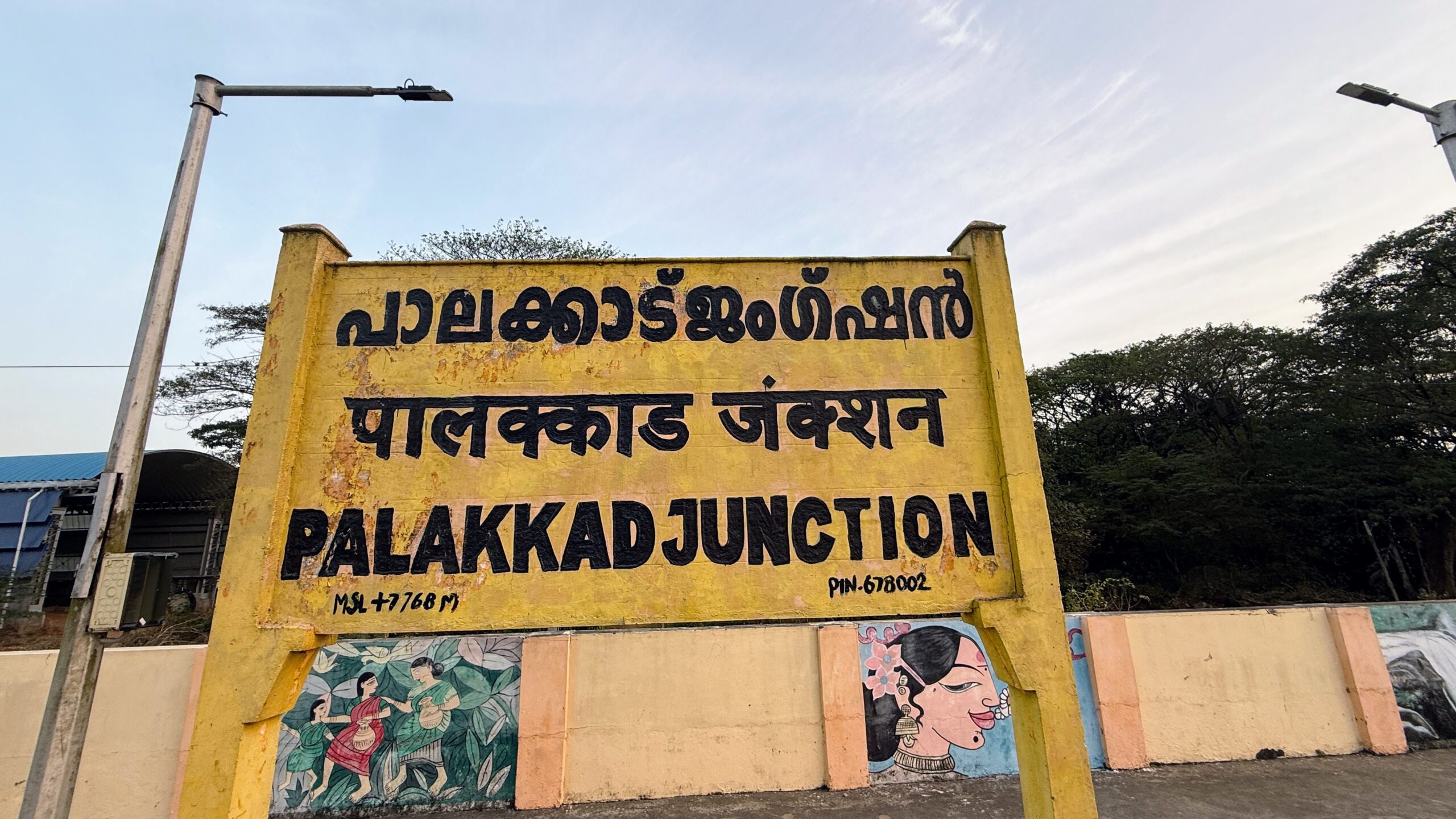
9. Better accountability for Palakkad and Thiruvananthapuram divisions
Palakkad and Thiruvananthapuram divisions are central to Kerala’s railway network. But they operate under a larger zonal structure headquartered outside the state.
A separate Keralam Railway Zone can bring these divisions under one state-focused administrative umbrella. It can also ensure better coordination between north Kerala, central Kerala and south Kerala.
10. Other regions have received new zones
Indian Railways has created new zones when administrative need, regional demand and development logic were considered important. If other regions can get dedicated zonal attention, Kerala’s case also deserves fair hearing.
Kerala is not asking for charity. Kerala is asking for administrative fairness.
What Should a Keralam Railway Zone Focus On?
A separate Keralam Railway Zone should not become another ceremonial office with name boards and speeches. It must have a clear development agenda.
It should focus on:
- Improving punctuality of trains passing through Kerala.
- Completing pending doubling and capacity expansion works.
- Introducing more MEMU and intercity services.
- Developing suburban-style rail services in high-demand corridors.
- Improving terminal capacity at key stations.
- Speeding up Sabari Rail and other long-pending projects.
- Strengthening station amenities without ignoring track capacity.
- Improving integration with KSRTC, metro, airports and ports.
- Expanding freight movement to reduce truck pressure on roads.
- Creating a transparent public grievance and project-monitoring dashboard.
A Practical Model
The proposed Keralam Railway Zone can be headquartered in Kerala, with Palakkad and Thiruvananthapuram divisions forming its core.
The headquarters can be located based on administrative logic, land availability, connectivity and existing railway infrastructure. The debate should not become a north Kerala versus south Kerala fight. That is exactly how serious public issues get killed.
The main demand must be clear: Keralam needs a railway zone that is accountable to Kerala’s passengers, Kerala’s economy and Kerala’s future mobility needs.
This Is Not a Political Luxury
Some people may ask: will a separate railway zone solve all problems?
No. A railway zone alone will not magically double tracks, create trains or remove delays overnight. That kind of fantasy is for WhatsApp University graduates.
But a separate zone can improve administrative focus, project monitoring, local accountability and long-term planning. It can make Kerala’s railway needs visible every day, not only during election season or budget speeches.
Conclusion
Keralam needs a separate railway zone because the present system is not enough for the state’s railway future.
Kerala has high passenger demand, saturated lines, delayed projects, weak terminal capacity, rising road congestion, tourism needs, pilgrimage traffic and growing freight requirements. These cannot be handled as secondary priorities inside a much larger Southern Railway structure.
A Keralam Railway Zone is not just about pride. It is about planning. It is about accountability. It is about giving railway passengers in Kerala the attention they have been denied for too long.
Kerala needs better trains, faster projects, stronger railway infrastructure and a voice that is heard.
It is time to seriously demand a Keralam Railway Zone.
Related posts:
 Comparison: Metro Rail, Tram Services, Subway Train, and Bus Services in a Busy City
 “High-speed” on Paper: The Reality of the Bengaluru–Ernakulam Vande Bharat Express
 Pit Line Construction Progressing at Palakkad Town Railway Station
 Amrit Bharat Express Trains for Kerala – Timings, Routes, and Why Passengers Are Not Happy