The Natural Doorway
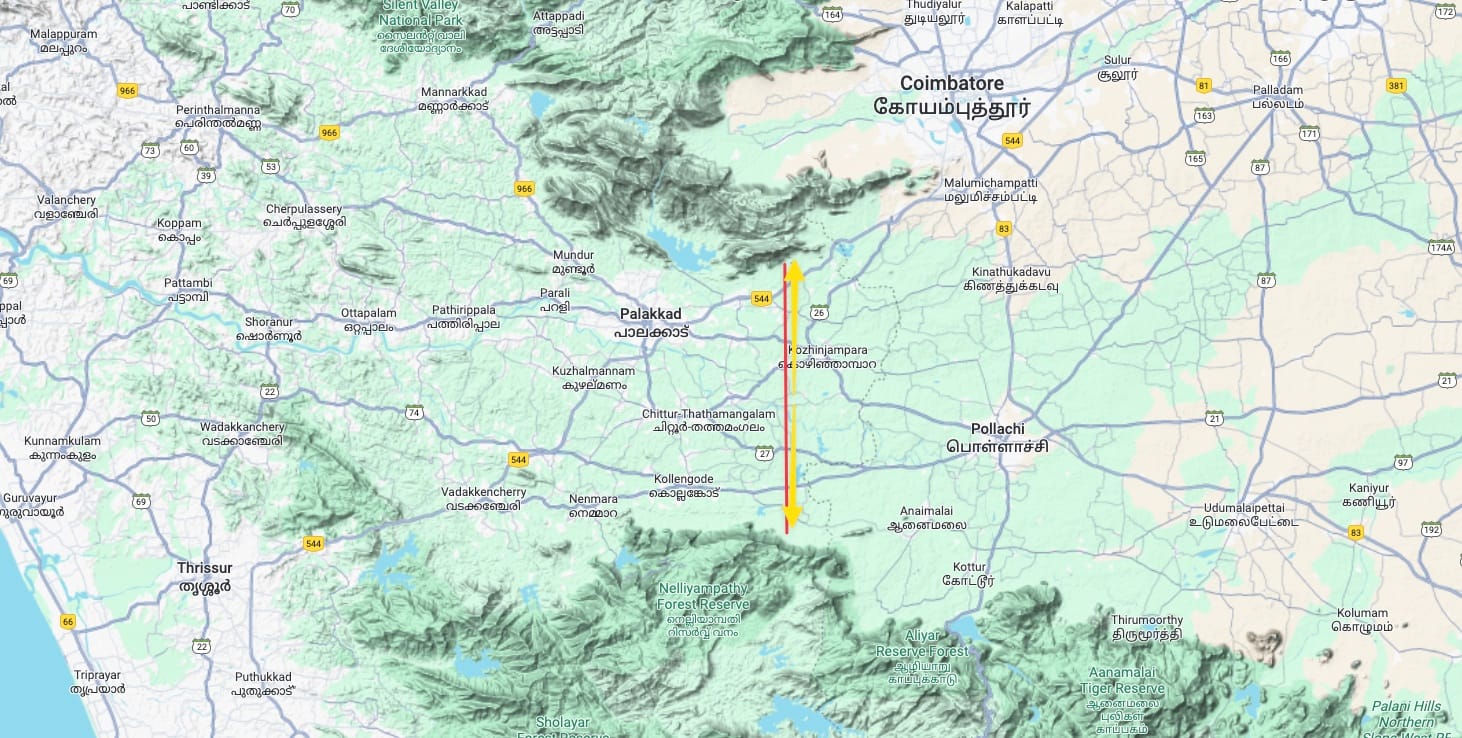
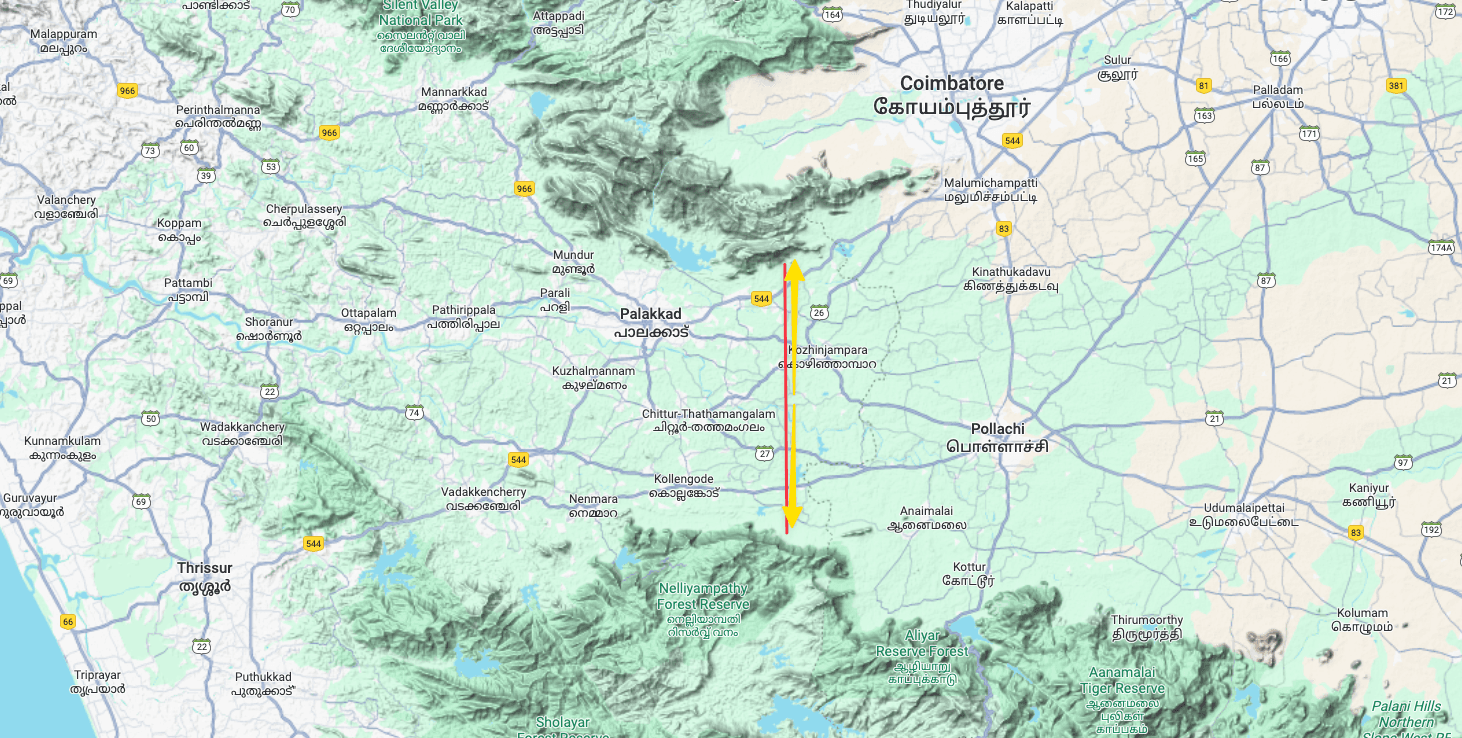
The Palakkad Gap is a ~30 km wide low pass in the Western Ghats – the only easy, low-elevation breach linking the Kongu plains (today’s Coimbatore–Erode belt) and the Malabar coast. People didn’t “discover” this in the 19th century. They wore it into a highway over millennia. Modern NH-544 simply sits on those old cart-paths.
Sangam & Early Historic Trade
In the Sangam age, caravans moved pepper, beryl, iron, beads and textiles between Kodumanal on the Kongu side and west-coast ports like Muziris. The most practical line of travel was Coimbatore → Walayar → Palakkad → Bharathapuzha valley → ports. That is the same spine your car follows today.
Romans On The West, Goods Through The Gap
1st–3rd century CE: Roman demand yanked Malabar pepper and timber to the coast. Roman coins and amphora shards turn up not only by the sea but inland at Kodumanal, showing the supply chain that crossed the Gap. Pliny famously grumbled that Rome was bleeding gold for Indian pepper. That pepper did not float over the Ghats by magic, ya – it walked and rolled through Walayar.
Jain Presence & Chola Highways
6th–10th centuries: Jain communities maintained shrines and way-stations along the Kongu–Palakkad road, evidence of steady footfall by merchants and pilgrims. 10th–13th centuries: the Cholas kept up a royal highway network, including the Rajakesari Peruvazhi, feeding into the Palakkad corridor. Spices and textiles crossed east-west here long before any colonial PWD file existed.
Chinese Connections & The Calicut Link
13th–15th centuries: Chinese trade ceramics flood Malabar sites. The great Ming expeditions under Zheng He anchored at Calicut. Pepper that reached those ships travelled via Palakkad → Ponnani/Calicut. Local memory even recalls Cheena kasu (Chinese cash coins) reported around the Palakkad–Chittur belt.
Mysore Wars: Fighting For The Pass
1766 onwards, Hyder Ali and then Tipu Sultan seized the Palakkad Gap to control Malabar’s trade and taxation. You don’t fight hard over a brand-new lane. You fight for a proven artery. The Gap was that artery.
British Era: Macadam Over Old Bones
19th century: the Madras Presidency formalised what existed – a trunk road Salem → Coimbatore → Walayar → Palghat → Ponnani – and placed customs posts (chavadis) on it. In 1861–62, the broad-gauge rail line threaded the same pass. Later, Podanur–Pollachi and Palakkad–Pollachi lines fixed the southern flank that bullock caravans had used for ages.
Old Routes → Modern Alignments
- Coimbatore → Madukkarai → Walayar → Kanjikode → Palakkad – ancient cart-road through the Gap. Today: NH-544 and Coimbatore’s Palakkad Road.
- Palakkad → Ottapalam/Pattambi → Kuttippuram → Ponnani – historic river-valley trunk to ports. Today: the Palakkad–Ponnani road connecting into NH-66.
- Pollachi flank: Coimbatore/Pollachi → Chittur → Palakkad – secondary route along the Anamalai edge. Today: the Palakkad–Pollachi highway and the BG rail link.
The Claim Debunked
The idea that the British “started” the Palakkad road flips history on its head. They standardised, taxed and metalled a pre-existing artery. From Sangam caravans and Jain pilgrims to Chola officials, Chinese-era spice convoys, and Mysore armies – everyone used the same doorway. The British were late tenants, not founders.
Why This Matters For Today
Palakkad Gap is not just terrain. It is policy. When we plan highways, rail capacity, logistics parks and border check-posts around Walayar, we are working with 2,000 years of geographic momentum. Respect the grain of the land and history rewards you with efficiency.
Quick Timeline
- 1st–3rd c. CE – Roman demand pulls pepper via the Gap to Muziris; Kodumanal thrives inland.
- 6th–10th c. – Jain way-stations mark a busy Kongu–Palakkad corridor.
- 10th–13th c. – Chola highways (Rajakesari Peruvazhi) feed into the pass.
- 13th–15th c. – Chinese and Arab trade peaks at Calicut; inland routes run through Palakkad.
- 1766–1790s – Hyder–Tipu fight to hold the Gap.
- 1800s – Presidency trunk road codified; Walayar customs points.
- 1861–62 – Broad-gauge rail through the Gap; later Pollachi links mirror old paths.
Suggested Reading & Map Anchors
Related posts:
 Indian Railways and the British Era: A Journey Through Time and Tracks
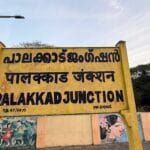 Palakkad Junction Railway Station: The Gateway to Kerala’s Rail Network
 The Real Story of Indian Railways Under British Rule: A Timeline of Exploitation
 FASTag Annual Pass 2025 – Complete Guide, Benefits, Eligibility & Activation Process