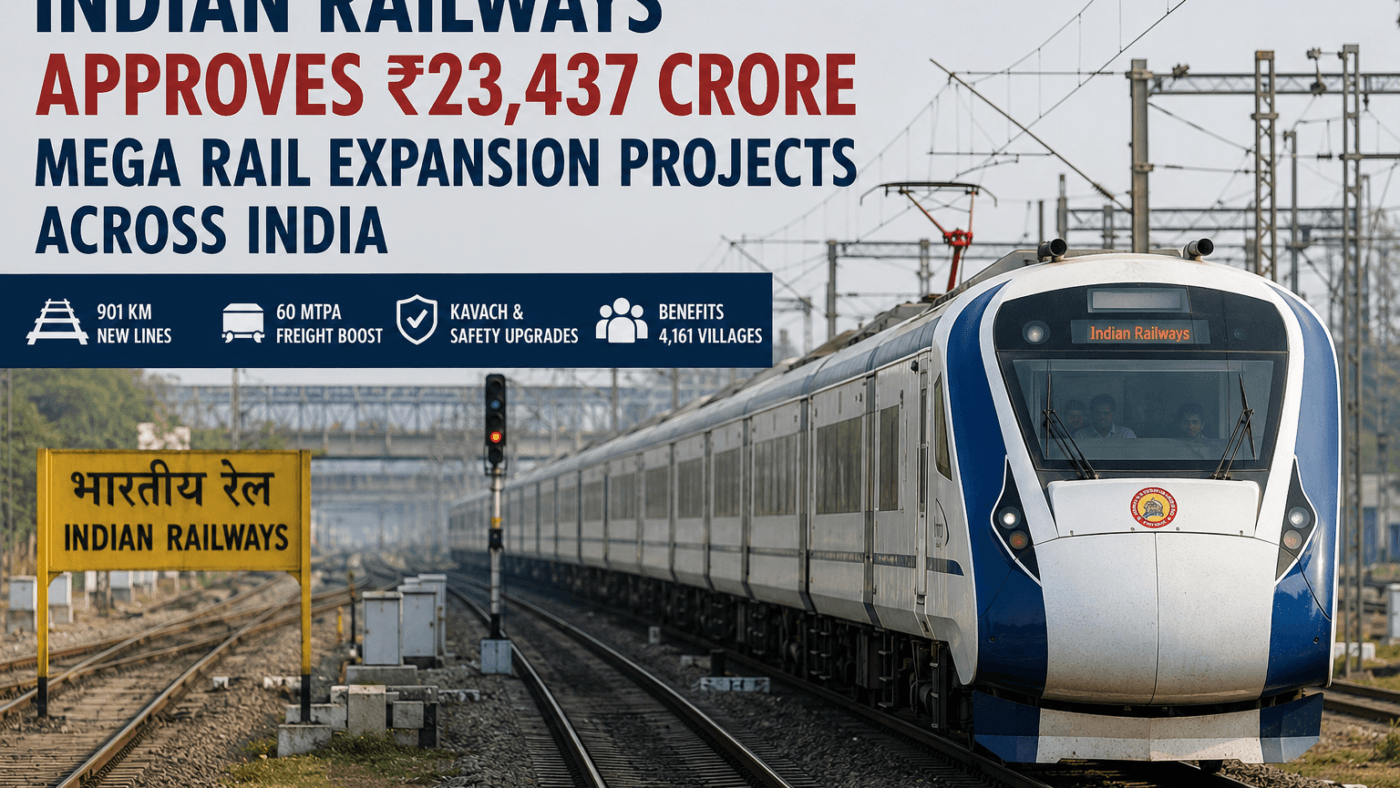
Indian Railways is set for another major infrastructure upgrade after the Union Cabinet approved three large multi-tracking projects worth ₹23,437 crore. The projects aim to remove bottlenecks on some of the country’s busiest rail corridors, improve freight movement, increase passenger capacity, and strengthen the railway network under the PM Gati Shakti National Master Plan.
Together with several additional line doubling, signalling and safety projects approved separately, these investments represent one of the largest recent capacity expansion programmes undertaken by Indian Railways.
Major Multi-Tracking Projects
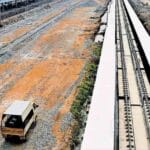
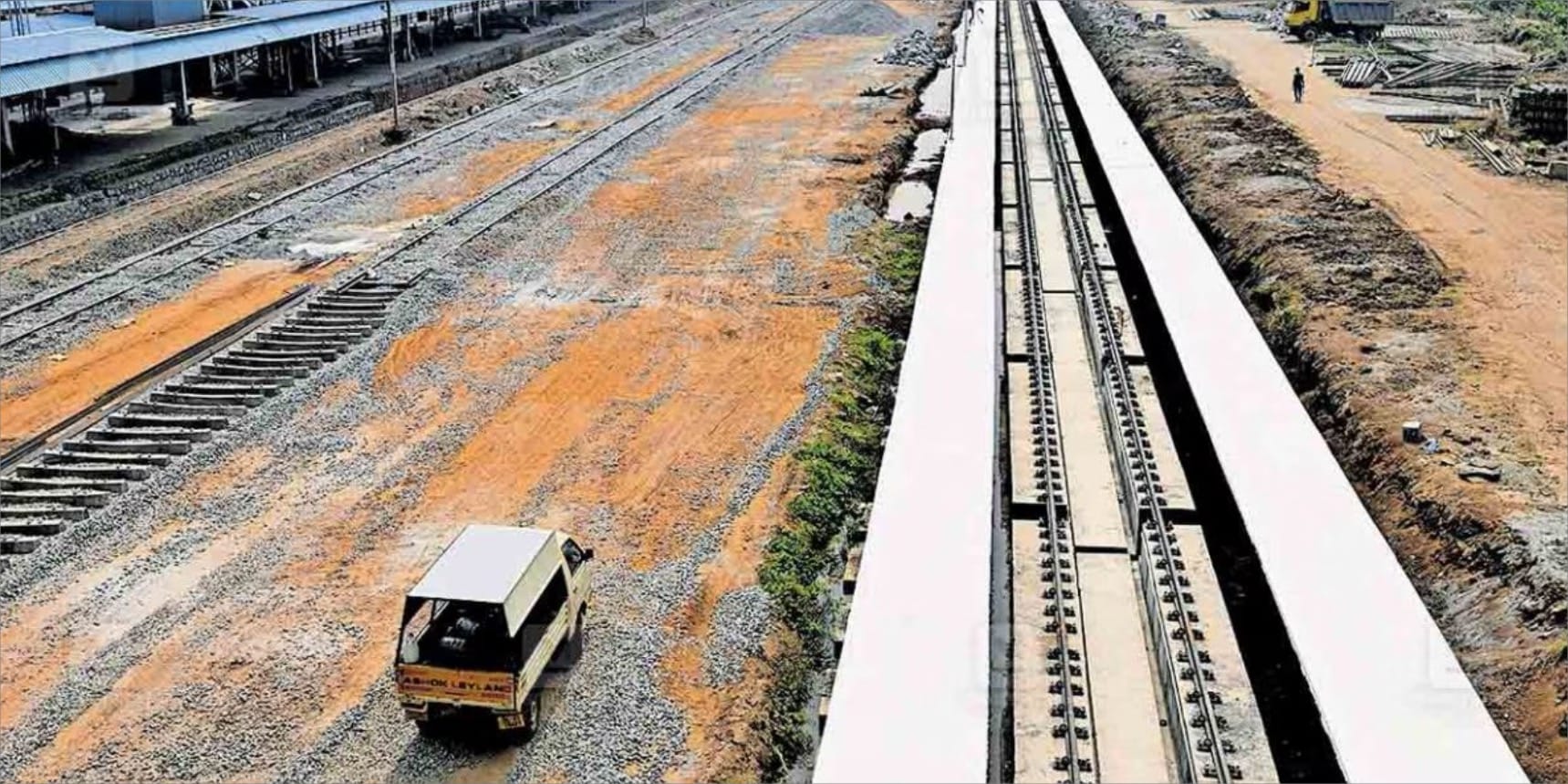
The Cabinet has approved approximately 901 km of new railway lines through third and fourth line construction across six states.
Nagda – Mathura Corridor
One of the busiest routes connecting Western and Northern India will receive third and fourth lines, helping reduce congestion and improve both passenger and freight operations.
Burhwal – Sitapur Corridor
The project in Uttar Pradesh will add third and fourth lines to increase operational capacity and improve regional connectivity.
Guntakal – Wadi Corridor
This important route passing through Karnataka, Andhra Pradesh and Telangana will be expanded through multi-tracking to improve freight movement and support industrial growth.
Expected Benefits
According to official information, these projects are expected to:
- Add nearly 901 km of new railway capacity.
- Increase freight carrying capacity by around 60 million tonnes per annum (MTPA).
- Benefit more than 4,161 villages.
- Improve reliability of passenger train operations.
- Reduce congestion on high-density routes.
- Lower national logistics costs by improving freight efficiency.
- Support the objectives of the PM Gati Shakti National Master Plan.
Additional Capacity Enhancement Projects
Apart from the mega corridor projects, Indian Railways has approved several regional infrastructure works worth more than ₹1,200 crore.
Adipur – Bhuj (Gujarat)
A 49 km line doubling project costing approximately ₹493 crore will improve connectivity to ports and industries in the Kutch region.
Somtane – Chikhli Freight Chord (Maharashtra)
A new 3.7 km freight chord line worth around ₹172 crore will help freight trains bypass congested sections on Central Railway.
Irugur – Podanur Doubling (Tamil Nadu)
The 10.77 km doubling project costing ₹277.42 crore will strengthen operations on the Chennai – Thiruvananthapuram corridor by increasing line capacity.
Bokaro Region Upgrades (Jharkhand)
Doubling works together with third and fourth line construction between Barbenda and Damrughutu will improve connectivity for the Energy, Mineral and Cement Corridor.
Digital Modernisation and Railway Safety
Indian Railways is also investing heavily in technology to improve safety and operational efficiency.
Electronic Interlocking
More than ₹421 crore has been approved to replace older relay signalling with Electronic Interlocking systems at 34 critical stations, mainly across the Delhi and Ambala divisions. These systems improve operational reliability while reducing the risk of signalling failures.
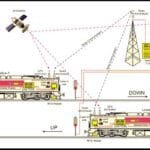
Kavach Automatic Train Protection
Over ₹310 crore has been allocated for expanding the indigenous Kavach Automatic Train Protection (ATP) system across 548 km of busy railway routes, including:
- Chennai Beach – Chengalpattu
- Shoranur – Mangaluru
Kavach is designed to prevent train collisions by automatically applying brakes if a train passes a signal at danger or exceeds safe speed limits.
What This Means for Passengers
Although many of these projects are designed to improve freight movement, passengers are also expected to benefit over time through:
- Better punctuality.
- Reduced congestion.
- Improved timetable flexibility.
- Capacity for introducing additional train services.
- Greater operational resilience during disruptions.
However, many of these benefits will only be realised after construction is completed, which typically takes several years depending on land availability, engineering complexity and funding.
Kerala Left Waiting Once Again?
While these approvals represent a significant investment in India’s railway infrastructure, Kerala has not received any major line capacity expansion project under this ₹23,437 crore package.
Several other states have been sanctioned new third and fourth lines, line doubling projects and major freight capacity enhancements. Meanwhile, Kerala continues to struggle with saturated railway corridors, limited line capacity, slow average train speeds and a shortage of long-distance train services despite recording some of the highest passenger occupancy levels in the country.
The inclusion of the Shoranur – Mangaluru section under the Kavach safety programme is a welcome development. However, Kavach improves safety and operational efficiency rather than increasing line capacity. What Kerala urgently needs are additional tracks on its busiest corridors, faster completion of pending doubling and tripling projects, improved freight infrastructure, modern railway stations and capacity to introduce more passenger services.
With passenger demand continuing to grow, there is a strong case for prioritising major infrastructure investments in Kerala during future rounds of railway expansion. Upgrading line capacity across the state would not only improve punctuality and reliability but also support economic growth, tourism and sustainable transport.
A Step Towards a Higher Capacity Railway Network
India’s railway network continues to experience rising passenger demand and freight volumes. Adding third and fourth lines on saturated routes, combined with advanced signalling and safety systems such as Kavach, is intended to increase capacity without relying solely on new railway alignments.
The latest approvals demonstrate Indian Railways’ continued focus on expanding capacity, improving safety and strengthening freight logistics. However, for railway users in Kerala, the announcement also highlights the urgent need for comparable investments to address the state’s long-standing capacity constraints and growing travel demand.