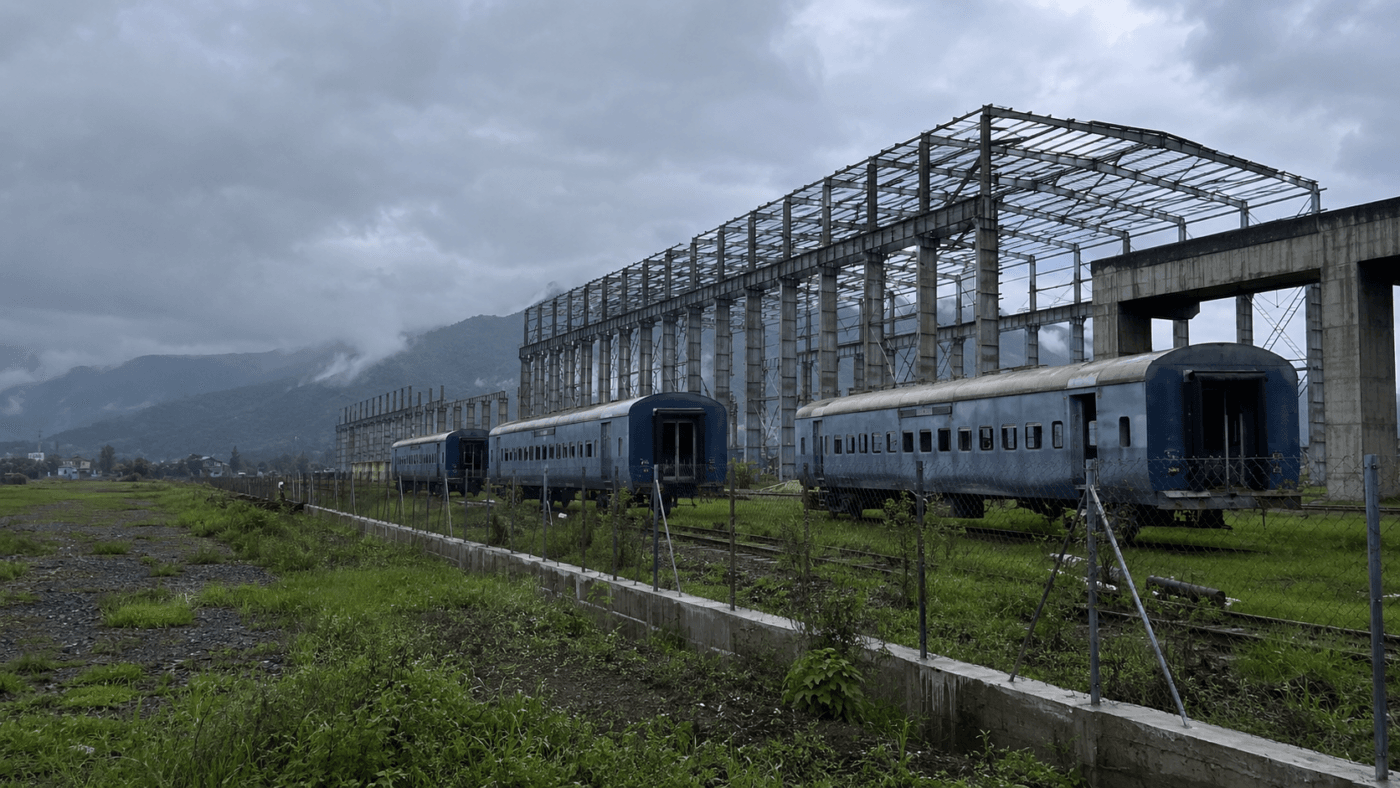
The Union government has indicated that the long-promised rail coach factory at Kanjikode in Palakkad will not be established. Around 228 acres acquired for the project will remain with Indian Railways, but no definite alternative project has been announced.
For nearly two decades, the proposed Kanjikode Rail Coach Factory was presented as one of Kerala’s most important railway industrial projects. It was expected to create jobs, attract supporting industries and turn the Palakkad-Kanjikode industrial belt into a railway manufacturing hub.
That expectation has now effectively ended.
In a written reply given in the Rajya Sabha on 31 July 2026, Railway Minister Ashwini Vaishnaw said that Indian Railways’ existing and planned coach-manufacturing capacity would be sufficient to meet its rolling-stock requirements in the near future.
The reply did not explicitly use the word “cancelled”. However, it gave no indication that the Kanjikode factory would be constructed. Instead, the approximately 228 acres acquired for it would be retained for the “future development/operational needs of Indian Railways”.
In practical terms, the Kanjikode coach factory has been shelved.
What did the Railway Minister say?
The latest issue arose from a question raised in Parliament by Kerala MP John Brittas.
According to reports, the Railway Minister stated that:
- Indian Railways presently has sufficient coach-manufacturing capacity.
- Existing production units and other planned facilities can meet the foreseeable demand.
- Therefore, a separate coach factory at Kanjikode is not considered necessary.
- The approximately 228 acres already acquired at Kanjikode will be used for unspecified future railway development or operational requirements.
The government’s response leaves one important question unanswered: What exactly will be established on this land, and when?
No project name, budget, implementation schedule or operational plan has so far been publicly announced for the site.
The latest parliamentary reply therefore appears to close the door on the coach factory while keeping the land under Railway ownership. Read the report in The New Indian Express.
The long history of the Kanjikode proposal
The story did not begin in 2026. It stretches back to the Railway Budget of 2008-09.
2008-09: The project enters the Railway Budget
The proposal for a rail coach manufacturing unit in Palakkad was first announced during the tenure of Railway Minister Lalu Prasad Yadav.
The factory was expected to manufacture modern passenger coaches and generate direct and indirect employment in Kerala. The initial land requirement was reportedly around 600 acres.
Kanjikode was considered suitable because it already had:
- A major industrial belt
- Railway connectivity
- Access to National Highway 544
- Proximity to Coimbatore
- Engineering and fabrication industries
- Central government industrial establishments
- Availability of industrial manpower
However, acquiring the full extent of land reportedly proved difficult. The project was subsequently reworked with a smaller land requirement.
2011: Railways reiterated its commitment
In March 2011, Railway Minister Mamata Banerjee told the Rajya Sabha that the Ministry of Railways was committed to setting up the factory at Palakkad after resolving the pending land-related issues.
At that stage, Kerala had proposed treating the value of the land as the state government’s equity in a joint venture. No construction work had begun, and no project funds had been released. View the Rajya Sabha reply dated 11 March 2011.
2012-13: Project formally sanctioned
The project was subsequently sanctioned in the Railway Budget for 2012-13 under a Joint Venture/Public-Private Partnership model.
A foundation stone was laid at Kanjikode in February 2012 by the then Railway Minister Dinesh Trivedi.
The proposed factory was expected to manufacture fuel-efficient, lightweight coaches. Contemporary statements placed its estimated cost at around ₹550 crore, although the cost would certainly have changed had the project eventually been implemented.
However, the foundation stone did not lead to factory construction.
Land handed over for the factory
The Kerala government acquired and transferred approximately 228 acres at Kanjikode for the project. Some parliamentary and political references have mentioned approximately 236 acres, apparently because of differences in the way the larger site, usable area and transferred railway land were counted.
The latest Railway Ministry figure is approximately 228 acres.
According to the 2026 parliamentary reply reported in the media, this land was acquired at a cost of approximately ₹39.80 crore.
A boundary wall and certain preliminary works were reportedly undertaken, but the factory itself never moved beyond the preparatory stage.
Warning signs appeared years ago
The Union government’s current position is not entirely new. The project had been moving towards abandonment for several years.
In a Lok Sabha reply dated 18 July 2018, the Railway Ministry acknowledged that the factory had been sanctioned in the 2012-13 Railway Budget. However, it said sufficient manufacturing capacity already existed and that the immediate establishment of a new coach factory was not being considered.
Interestingly, the same reply also stated that the government had not decided to withdraw the project. View the Lok Sabha reply dated 18 July 2018.
That distinction kept the proposal technically alive, even though no meaningful progress was being made.
In November 2019, the Railway Ministry repeated essentially the same argument. It said that the projected requirement for mainline coaches did not justify immediately starting another coach factory. View the Lok Sabha reply dated 20 November 2019.
Therefore, the 2026 reply is less a sudden policy reversal and more the final acknowledgement of a decision that had been evident for years.
Was the Kanjikode factory shifted to Haryana?
This question has repeatedly appeared in Kerala’s political debate.
In 2017, reports claimed that the proposed Kanjikode coach factory was being shifted to Sonipat in Haryana. Protests were organised in Kerala against the alleged transfer.
The Railway Ministry’s formal position was that projects elsewhere were not necessarily replacements for Kanjikode. From a strict administrative point of view, it may be difficult to prove that one specific sanctioned project was simply lifted from Kanjikode and moved to another state.
But the political complaint cannot be dismissed so easily.
The real issue is that manufacturing and maintenance capacity was expanded or proposed in other parts of India while the Kanjikode project remained frozen on the ground that sufficient capacity already existed.
That contradiction deserves a proper explanation.
If additional production facilities could be sanctioned elsewhere, the Centre should explain why Kanjikode was not considered viable, particularly after Kerala had acquired and transferred a large tract of land for the project.
Why Kanjikode was considered suitable
Kanjikode is not a random rural location chosen for political convenience. It is one of Kerala’s largest industrial areas.
The region has several advantages for railway manufacturing.
Existing industrial ecosystem
Kanjikode and nearby areas already host engineering, steel, electrical, instrumentation and fabrication industries. A large railway project could have supported a network of component suppliers and small and medium enterprises.
BEML presence
BEML’s Palakkad complex is located in the Kanjikode industrial region. BEML already works in the rail, metro, defence and heavy-engineering sectors.
The presence of an experienced public-sector engineering company demonstrates that railway-related manufacturing is technically possible in Palakkad.
Strong transport connectivity
Kanjikode lies close to the busy Palakkad-Coimbatore railway corridor and National Highway 544. It has access to Kerala and Tamil Nadu’s industrial and logistics networks.
Employment potential
A coach-manufacturing facility would have created direct technical employment as well as jobs in:
- Component production
- Metal fabrication
- Electrical systems
- Interior fittings
- Logistics
- Maintenance
- Security
- Catering and local services
The loss cannot therefore be measured only by counting the jobs inside the proposed factory. The wider industrial opportunity has also been lost.
Kerala’s larger concern: railway production versus railway consumption
Kerala is an important market for Indian Railways. The state has high passenger demand, heavily used routes and a substantial migrant and long-distance travel population.
Yet Kerala has received very little in terms of major railway production units.
This creates a legitimate policy question. Railway infrastructure should not be distributed mechanically among states, but industrial investment should also not remain concentrated in a few traditional locations without transparent technical justification.
The decision must be based on measurable criteria such as:
- Logistics cost
- Land availability
- Skilled workforce
- Regional demand
- Supplier ecosystem
- Export opportunities
- Network access
- Economic impact
- Balanced regional development
If Kanjikode failed these criteria, the Railway Ministry should publish the relevant feasibility study and comparative assessment. Simply stating that existing capacity is adequate does not explain why land was acquired, a project was sanctioned and a foundation stone was laid.
The problem with foundation-stone politics
The Kanjikode episode is a textbook example of how large public projects are announced without guaranteed financing, execution structures or deadlines.
A Railway Budget announcement is not the same as an operational project.
For a major factory to become real, it normally needs:
- Formal administrative approval
- A viable project report
- A confirmed implementation model
- Land free of legal and environmental problems
- Budget allocation
- Tenders or an identified joint-venture partner
- Construction contracts
- Annual expenditure and physical progress
Kanjikode crossed some of these stages, including budget announcement, sanction and land transfer. But it never secured a viable implementation mechanism.
The foundation stone created political visibility. It did not guarantee construction.
What will happen to the 228 acres?
This is now the most important practical issue.
Indian Railways says the land will be retained for future development or operational requirements. That description is extremely broad.
The land could potentially be used for:
- A railway component-manufacturing unit
- A Vande Bharat or modern train maintenance facility
- A coach refurbishment or periodic-overhaul workshop
- A freight terminal or logistics hub
- A locomotive or rolling-stock maintenance depot
- A railway training and research facility
- A rail-based industrial park
- Warehousing and operational infrastructure
- A joint project involving BEML or another public-sector company
These are possibilities, not announced projects.
The land should not be allowed to remain idle for another decade under the vague label of “future requirements”.
Should the land be returned to Kerala?
This question is likely to become politically contentious.
The land was acquired and handed over specifically for a coach factory. If the sanctioned purpose has been abandoned, Kerala can reasonably demand one of two outcomes:
- Indian Railways must establish another substantial railway industrial project on the site within a fixed period.
- The land must be returned to the state government for another employment-generating public project.
Whether Kerala can legally compel the Railways to return the property depends on the exact acquisition, transfer and ownership documents. These documents should be made public before confident legal claims are made.
The issue cannot be settled merely through political speeches.
What Kerala’s MPs and government should demand
Another symbolic protest or resolution will achieve little unless it is backed by specific demands.
1. The complete project record
The Centre should publish:
- The original feasibility report
- Project sanction and estimated cost
- Proposed production capacity
- Correspondence regarding the JV/PPP model
- Attempts made to identify a private or public partner
- Expenditure incurred so far
- Reasons recorded for non-implementation
- Present status and title of the land
2. A clear alternative-use plan
Indian Railways should be asked to identify a replacement project, along with:
- Project name
- Capital cost
- Land requirement
- Employment potential
- Approval status
- Implementation deadline
3. A time-bound decision
“Future operational use” cannot be allowed to become another indefinite promise. Parliament should insist on a defined deadline for approving and starting an alternative project.
4. Independent technical evaluation
A fresh assessment should examine whether the site can support modern railway manufacturing, refurbishment, maintenance or component production.
The evaluation should consider current requirements such as Vande Bharat trains, aluminium coaches, metro rolling stock, freight equipment and export-oriented rail products.
Political responsibility cuts across parties
The project passed through governments led by different political parties at both the Centre and in Kerala.
It was announced under one central government, formally sanctioned under another phase of the same coalition era and kept pending under subsequent governments. Kerala governments acquired the land and repeatedly demanded implementation, but they too failed to secure a binding execution agreement.
Therefore, the failure cannot honestly be reduced to one party or one minister.
However, the Union government presently controls Indian Railways and has now stated that a separate factory is unnecessary. It carries the immediate responsibility to explain the final decision and specify what will happen to the acquired land.
Kerala’s political parties, meanwhile, must move beyond ritual accusations and demand documents, deadlines and an economically credible replacement project.
Conclusion
The Kanjikode Rail Coach Factory did not fail because Kerala lacked land or industrial potential. Land was acquired, the project was sanctioned and a foundation stone was laid.
It failed because a political announcement was never converted into a funded, contractually executable industrial project.
After 18 years, the Centre has effectively declared that the factory is no longer required. But that cannot be the end of the matter. Approximately 228 acres of strategically located public land are now under Railway control, without a clearly announced purpose or implementation schedule.
Kerala should not settle for another vague assurance.
The demand must now be precise: establish a substantial railway production, maintenance or technology facility at Kanjikode within a fixed timeframe, or return the land so it can be used for another genuine public industrial project.
A foundation stone is not development. A parliamentary promise is not a factory. What matters is what is actually built, how many people it employs and whether public land produces a measurable public benefit.
What do you think? Should Indian Railways establish an alternative railway manufacturing or maintenance unit on the Kanjikode land? Or should the land be returned to Kerala for another industrial project? Share your views in the comments.
Roads and Rails is a public-awareness initiative covering railway development, road infrastructure, transport policy and civic mobility issues. Visit www.roadsandrails.org for more updates.
Related posts:
 Kerala’s Railway Dreams: The High-Speed Revolution of KRail Project
 Why Keralam Needs Its Own Railway Zone: A Serious Case for Better Rail Development
 Why Are LHB Coaches in Indian Railways Jerky? A Closer Look at the Passenger Experience LHB coach jerks, Indian Railways 3AC experience, ICF vs LHB coach, train jerks India
 Exploring Palakkad’s Hidden Railway Heritage | Palakkad Railways